

Engineering Markup Is Dead
The real cost structure behind SaaS was never compute — it was people. That bill just got cut in half.

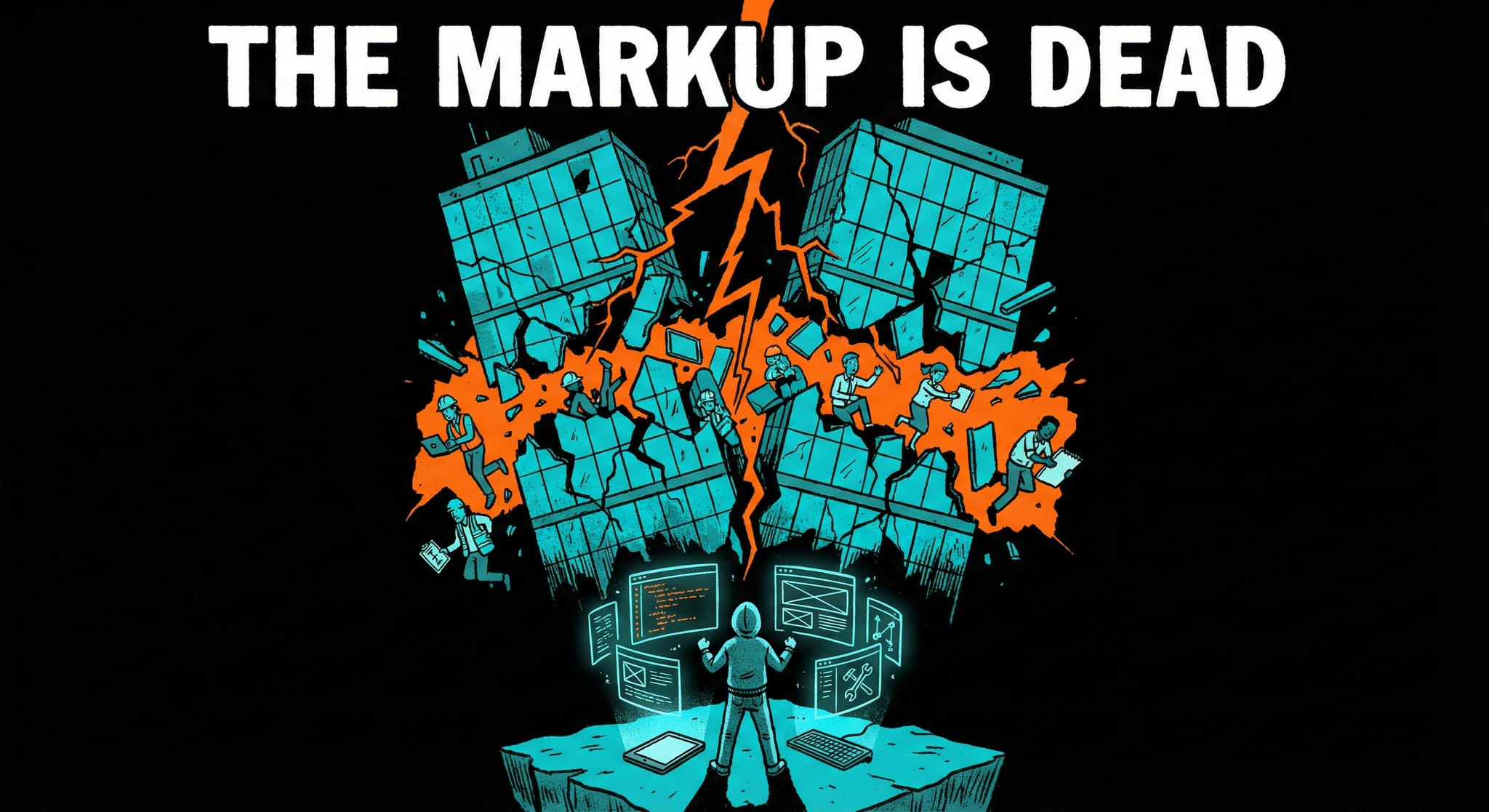
$50/seat/month was never about servers. It was about amortizing an army of engineers, PMs, designers, and QA across enough customers to make the math work. The markup between what compute cost and what you charged, that gap was the business model. AI didn't disrupt the features. It disrupted the payroll.
The Flip
Two things broke simultaneously: The floor dropped out. The bottom 80% of work across the whole org, not just engineering, but product specs, design iteration, QA, documentation, ops, got automated. The cost to go from idea to validated product collapsed to near-zero. A solo founder with good taste now POCs in a day what used to take a team a quarter. The ceiling rose. The top 20%, taste, architecture, knowing what to build and why, now gets 5-10x more use per dollar. One person with judgment ships at the velocity that used to require a department. Both directions compress the markup. The cost structure that justified SaaS pricing didn’t shrink. It evaporated.
“But Data Moats”
This is the strongest counter-argument. It’s real, but it’s eroding faster than people think. Salesforce has your CRM. Workday has your org chart. That’s genuine lock-in, and these are institutions. Institutions are slow to topple. But reverse-engineering data is cheap now. In-browser agents from companies like Harmonic and Happenstance literally scrape your entire LinkedIn graph without needing an export button. They don’t need your API. They don’t need your permission. The “painful data migration” moat, the thing that kept users stuck in products they’d outgrown, is being dissolved by software that routes around the wall instead of going through the gate. These companies face a binary: evolve by making UX the actual moat, or get hollowed out by faster competitors who nail the interface layer. Data gravity that used to be a permanent advantage is becoming a temporary one.
Distribution Is Operations
Here’s where the skeptics accidentally prove the thesis. “A million competing products don’t matter if nobody finds them.” Correct. Distribution is king. Getting users, keeping users, serving users, that’s the game. But that’s operations, not software. Marketing, sales, community, support, trust. The stuff you can’t automate with a coding assistant. The software part got commoditized. What’s left is the operational muscle that was always the hard part. If your SaaS company already understood this, congratulations, your costs just dropped and your moat stayed. If you thought the software was the business... That’s where it gets uncomfortable.
The Punchline
The SaaS companies that survive already know they’re operations companies that happen to build software. The ones that think they’re software companies are already dead. They just haven’t noticed because the subscription revenue keeps hitting for a while after the moat disappears. The product was never the code. It was the operation around it. We just couldn’t see it when building was expensive.